
Everyday nourishment
Nutrition & hydration
A little structure can make eating well feel simpler. Keep protein, colorful produce, carbohydrates, fats and water in the picture, even when your appetite changes.
Calculate your protein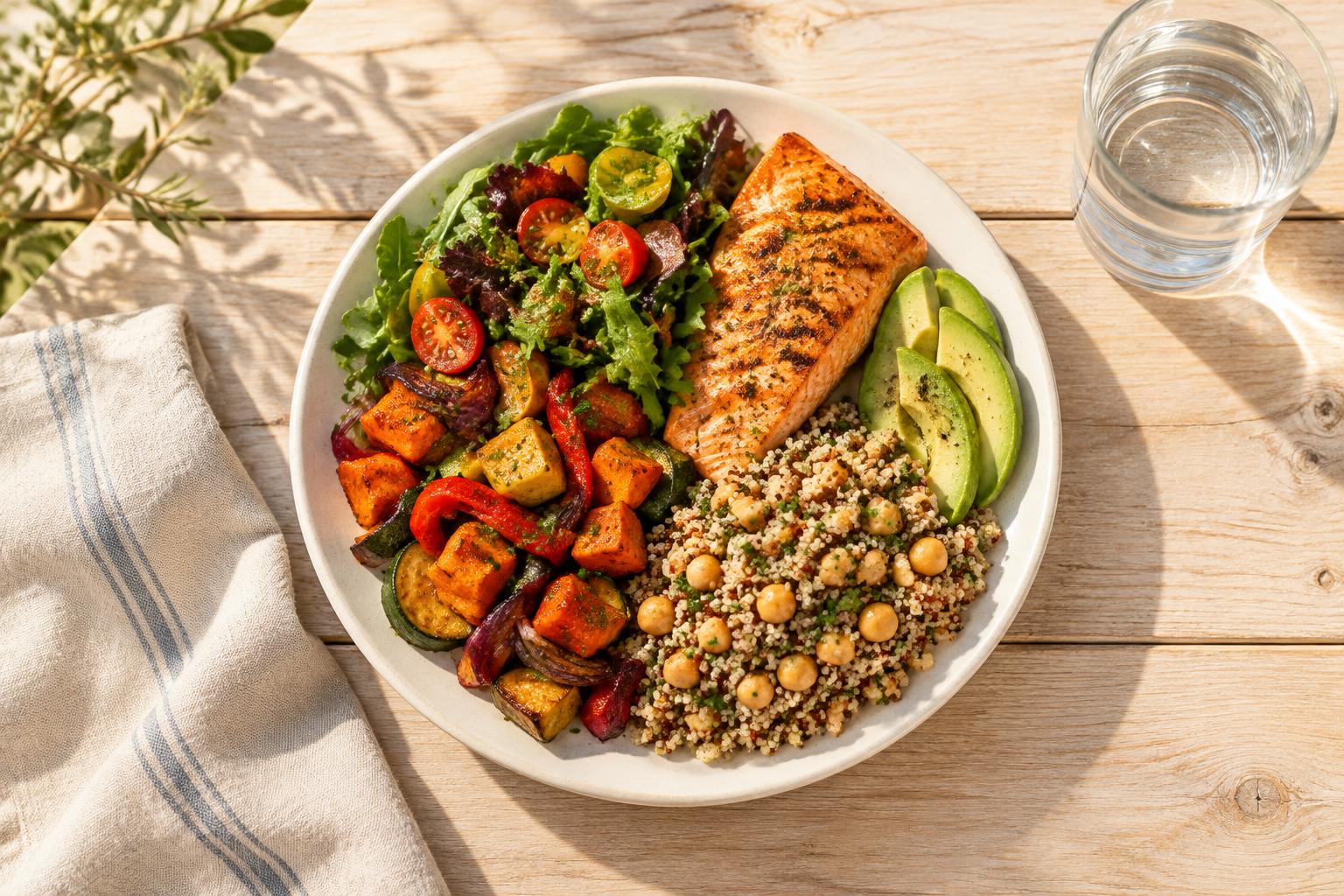
A balanced plate, not a perfect one.
Start with about half your plate as vegetables and fruit, then add a protein source and a whole grain or other starchy food. Include a little unsaturated fat. Dairy or a fortified alternative can round out the meal.
Think salmon or tofu, quinoa, roasted vegetables and avocado. Adjust portions to your needs. This is a flexible meal idea, not a prescribed menu.
Protein, throughout the day
Include fish, eggs, poultry, Greek yogurt, tofu, beans or lentils with meals. Spreading protein across meals can be easier than trying to get it all at dinner. Plant-based options count, too.
Carbohydrates belong on your plate
Choose oats, brown rice, quinoa, potatoes, fruit and beans. Carbohydrates fuel daily activity, and whole-food sources bring fiber and other nutrients. You do not need to cut out an entire food group.
Make room for unsaturated fats
Olive oil, avocado, nuts, seeds and fish supply fats that help your body absorb certain vitamins. Add portions that fit your appetite and care plan, rather than avoiding fats altogether.
Build fiber gradually
Vegetables, fruit, beans and whole grains support bowel regularity. A common adult reference is 14 grams of fiber per 1,000 calories. Increase slowly and pair with adequate fluid to limit bloating and constipation.
Water is part of your care.
Water helps regulate body temperature, transport nutrients and support digestion and bowel function. Your needs change with activity, heat, illness and medications. Food, water and other beverages all contribute to total fluid intake.
- Sip regularly through the day and keep water within reach.
- Drink with meals and replace fluids lost through sweat.
- Pale-yellow urine can be a rough guide, but medications and supplements can change its color.
- Do not force excessive water. Follow your clinician’s fluid limit if you have kidney or heart disease.
When taking a GLP-1
A smaller appetite can make it harder to get enough nutrition. Try smaller, balanced meals, include protein regularly and eat slowly. Very large or rich meals may worsen nausea for some people.
Do not rely on the scale alone. Discuss protein needs and resistance exercise with your care team. A registered dietitian can help if you struggle to eat enough or have dietary restrictions.
Contact your clinician promptly for persistent vomiting or diarrhea, dizziness, very little urine or difficulty keeping fluids down. Seek urgent care for severe symptoms.
For general adult education, not an individual nutrition prescription. Pregnancy, breastfeeding, kidney or heart conditions and eating-disorder history need individualized guidance. All medical care is overseen by Elite Care Health.